Responsible ownership begins with safety. Anyone who handles or even visits a place with firearms must understand a few basic rules. This guide covers general safety principles, protective equipment, storage and the paperwork that often comes with ownership. It is educational and does not replace professional training or local law.
Safety comes first
Accidents with firearms are almost always preventable. They usually result from carelessness, lack of training or ignoring simple rules.
Treat every firearm as if it were loaded, every time, without exception.
The core handling rules
Keep the muzzle pointed in a safe direction, keep your finger off the trigger until ready to shoot, and be sure of your target and what lies beyond it. These rules are taught by safety organizations worldwide.
Memorize them and repeat them whenever you handle equipment.
Get formal training
A certified instructor can teach handling, cleaning and storage in a controlled setting. Many ranges and clubs offer beginner courses.
Training is also the best way to correct habits early.
Learn the laws
Rules on ownership, transport and carrying differ by country, state and city. Check requirements before buying anything.
Ask local authorities or licensed dealers when in doubt.
Industry safety resources
Industry groups publish clear guidance and educational materials. The NSSF safety pages provide practical information on storage and responsible ownership.
Read them before your first visit to a range.
Store securely
Unauthorized access is a major cause of accidents, especially with children. Use a locked safe or cabinet and store ammunition separately.
Keep keys and combinations out of reach.
Talk to children
Curiosity is natural, and secrecy increases risk. Teach children to stop, not touch and tell an adult if they find a firearm.
Supervise any contact with equipment closely.
Eye and ear protection
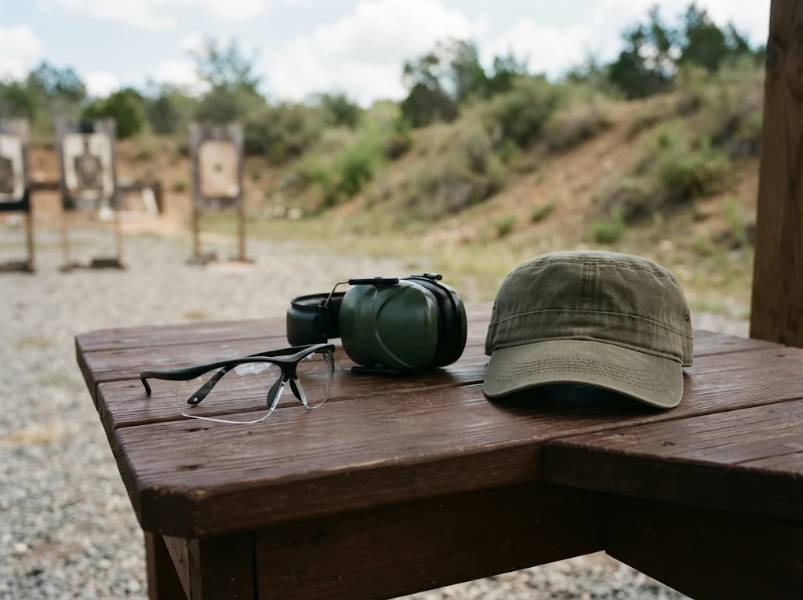
Shooting produces loud noise and flying debris. Quality ear muffs and impact resistant glasses are required at every range.
Use both even for short sessions.
Choose proper clothing
Wear closed toe shoes, a shirt with a neckline that does not allow hot brass to fall inside and comfortable layers. Avoid loose items that could snag.
Tie back long hair.
Know what to expect at a range
Ranges have rules, signals and safety officers. Listen carefully to the briefing and follow all commands.
Do not handle equipment when others are downrange.
Range etiquette
Be quiet, respect others and ask before touching someone else property. Clean up your brass and trash.
Never rush or show off.
Transport safely
Carry unloaded firearms in a locked case and keep ammunition separate when required by law. Do not leave them in unattended vehicles.
Know the rules for crossing borders.
Maintenance basics
Regular cleaning keeps equipment reliable and safe. Follow the manual and use the right tools.
Always confirm that the firearm is unloaded before cleaning.
Ammunition care
Use the correct type for each firearm and store it in a cool, dry place. Damaged or corroded ammunition should be disposed of properly.
Never mix calibers.
Documents and permits
Ownership often requires background checks, licenses and proof of identity. Foreign residents may need records from their home country.
Applicants sometimes need a translated criminal record, as our guide to police clearance certificate translation explains.
International visitors
Visitors who want to use a range abroad must follow local entry and safety rules. Instructions and waivers are not always available in their language.
Clubs and tour companies use Polish translation services and other language support to share safety rules clearly.
Avoid alcohol and drugs
Never handle firearms when impaired. Judgment, reaction time and coordination are all affected.
Certain medications also cause drowsiness, so read labels.
Know your limits
Fatigue, stress and distraction raise the risk of mistakes. Stop if you feel tired or upset.
There is no shame in ending a session early.
Have a plan for emergencies
Know where the first aid kit is and how to call for help. Learn basic first aid.
Stay calm and follow range procedures.
Respect others and the environment
Choose safe, legal places for shooting and collect your waste. Noise can disturb neighbors and animals.
Good manners protect the reputation of the whole community.
Keep learning
Safety is a habit that needs renewal. Take refresher classes and read updates on law and equipment.
Experienced users stay careful because they know how quickly things can go wrong.
Final thought
Safe ownership is built on discipline, knowledge and respect. Follow the rules every time, and encourage others to do the same.
Safety is the shared responsibility of everyone at the range.
Choose gear that fits
Protective gear should fit well. Ear protection should seal comfortably and glasses should not slip. A padded bag keeps equipment organized and protected during travel.
Comfort supports focus, and focus supports safety.
Learn from experienced mentors
Ask club members and instructors about their habits and lessons learned. Experience teaches details that a manual may miss. Be humble, listen carefully and never be embarrassed to ask a question.
A good mentor will always prefer a question to a mistake.