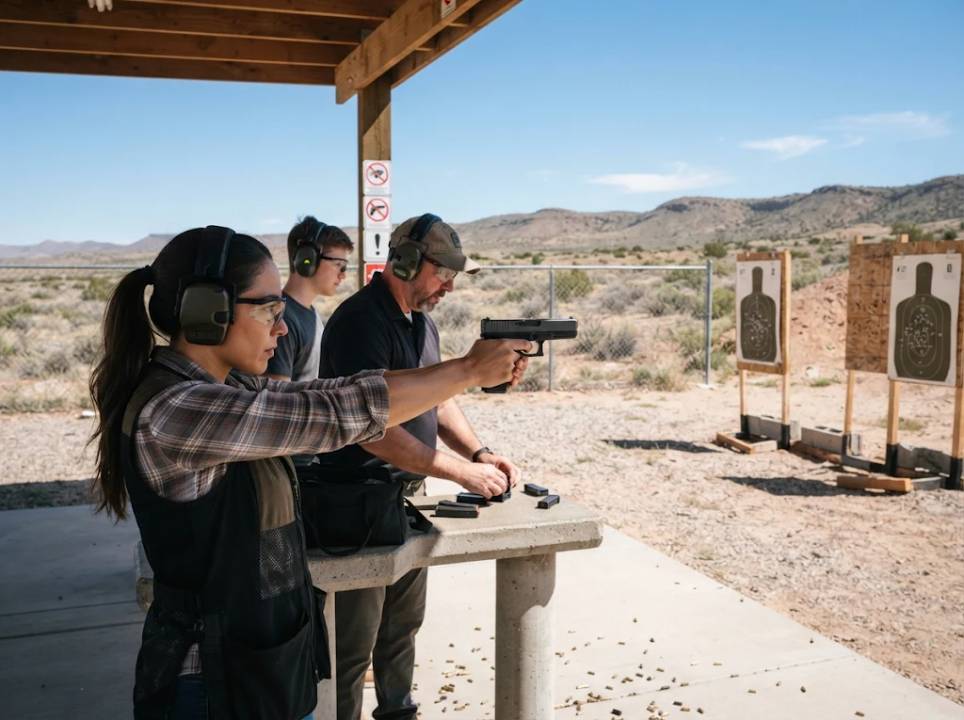
Target shooting is a regulated sport with a long tradition of discipline, patience and respect. Done properly, it teaches focus, control and responsibility, and it is practiced in clubs and licensed ranges around the world. Done carelessly, it is dangerous. This article is written for adults who are thinking about taking up the sport in a lawful way. It explains safety rules, training, equipment basics, legal requirements, club life and how international shooters handle paperwork. It does not replace instruction from certified trainers and local authorities.
Safety Comes Before Everything
Every credible organization teaches the same core rules: treat every firearm as loaded, keep the muzzle pointed in a safe direction, keep fingers off the trigger until ready to fire and be sure of the target and what is beyond it. The National Shooting Sports Foundation publishes educational material on safe handling and storage that beginners should read before visiting a range.
A new shooter should spend more time learning rules and habits than firing shots, because safe habits protect everyone for the rest of their shooting life.
Take a Certified Course
Beginner courses led by certified instructors teach handling, range etiquette, storage and basic marksmanship. Look for instructors with recognized qualifications and good reviews. Ask about class size, equipment provided and the legal topics covered. A reliable course also explains first aid and emergency procedures.
Never learn from friends who skip safety rules, however experienced they claim to be.
Protective Equipment
Hearing and eye protection are mandatory at ranges. Electronic earmuffs allow normal conversation while blocking loud noise. Closed shoes, a cap and clothing that covers skin are sensible. Instructors will explain additional gear for specific disciplines, such as clay targets or precision rifles.
Replace damaged protection promptly, since hearing loss from noise is permanent.
Know the Law
Rules about ownership, transport, storage and ammunition vary widely by country, state and city. Licensing may require training, background checks and secure storage. Always check current rules with official authorities, and never assume that what is legal in one place is legal in another.
If you move or travel with equipment, research regulations in advance and carry the required permits.
Paperwork for International Shooters
Competitors who travel abroad for matches, or people who relocate, often need translated documents such as permits, club memberships, medical certificates and criminal record extracts. Our guide on police clearance certificate translation explains typical steps for official use. Shooters from Northern Europe may also need finnish translation services for competition rules and entry forms.
Start early, since permits can take weeks to process.
Choosing a Club
Clubs offer supervised ranges, coaching, competitions and a community that values safety. Visit before joining, observe how members behave, ask about training programs and check the condition of the range. A good club welcomes questions and corrects unsafe behavior at once.
Membership also gives access to storage solutions and equipment advice.
Develop Marksmanship
Fundamentals include stance, grip, sight alignment, breathing and trigger control. Practice slowly, keep a log of results and ask the coach to review your technique. Dry-fire exercises, where permitted and safe, build consistency. Mental training, such as relaxation and focus, is as important as physical skill.
Small, steady improvement is the sign of a mature shooter.
Storage and Maintenance
Firearms must be stored unloaded, locked and separate from ammunition, out of reach of children and unauthorized persons. Clean equipment regularly according to manufacturer instructions. Keep records of serial numbers and permits, and report any loss or theft immediately to authorities.
Responsible storage prevents accidents and theft.
Competitions and Disciplines
Sport shooting includes many disciplines, from clay target events to precision pistol and rifle matches. Each has rules, scoring systems and equipment categories. Beginners can start with club level events to learn procedures and meet others. Read the rulebook, arrive early for safety briefings and follow instructions from range officers without argument. Competition teaches self-control, sportsmanship and the ability to perform under pressure.
Enjoying the community is as rewarding as improving scores.
Ethics and Attitude
Respect for people, wildlife, property and the law defines the responsible shooter. Do not handle equipment when tired, distressed or under the influence of alcohol or drugs. Speak up politely when you see an unsafe act. Share knowledge with beginners, and represent the sport well in public.
Good attitudes protect the future of the sport.
Costs to Expect
Budget for courses, licenses, range fees, protective gear, storage and ammunition. Renting equipment before buying lets you test options. Used equipment can be economical, but have it checked by a qualified person. Insurance for liability may be required or advisable.
Plan costs for the first year, and increase spending gradually as your skills grow.
Mental Preparation and Focus
Shooting is as much a mental sport as a physical one. Learn to control nerves with slow breathing, a short pre-shot routine and positive self-talk. Keep sessions short and stop when you feel tired or distracted, since concentration drops quickly. Many shooters keep a notebook where they record conditions, equipment settings, scores and feelings after each session.
Reviewing these notes helps you find patterns and measure progress objectively.
Youth and Family Participation
Many clubs offer junior programs with strict supervision and age-appropriate training. Parents should visit the club, meet the coaches and understand the rules before allowing a child to take part. Sport shooting can teach young people responsibility and concentration when it is guided by qualified adults and combined with clear rules at home about storage and respect.
Open communication between parents, coaches and young shooters keeps the activity safe and positive.
Next Steps for Beginners
Begin by reading official safety material, find a certified course, visit a club as a guest and ask questions without embarrassment. Take your time before buying equipment, and rent or borrow until you know what you like. Set modest goals, such as completing a course and attending a few club evenings.
Patience and humility are the best signs of a future skilled shooter.
Range Etiquette and Commands
Ranges use clear commands to start and stop shooting, and everyone must obey them at once. Learn the signals before your first visit, ask questions during the safety briefing and never handle equipment when others are downrange. Respect lanes, keep your area tidy and pick up your brass if the rules require it.
Courtesy and attention are the first signs of a safe shooter.
Traveling to Competitions
Transporting equipment to another city or country requires planning. Check airline rules, local laws and the permits needed by organizers. Use approved cases and carry documents in a folder. Arrive early to complete registration and equipment checks.
Good preparation reduces stress and lets you focus on performance.